news article
Sports science research debunks stretching myth
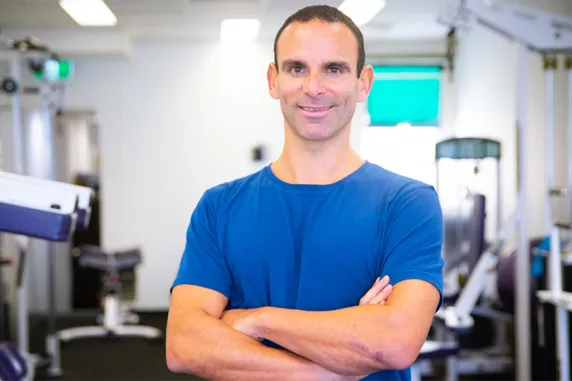
A PhD graduand, who has conducted an extensive study on the effects of warming up and stretching before physical activity, will receive a PhD at Charles Darwin University’s virtual graduation ceremony this Friday.
Dr Tony Boutagy, who has been a personal trainer for 25 years, used 60 people performing six different warm up methods throughout the study.
The aim of the study was to identify the effects of various stretching methods – either alone or in combination – on the muscle performance tasks of strength, speed, power and endurance.
Dr Boutagy said that when he began the study in 2004 there was a consensus from sports scientists that athletes should avoid stretching when warming up for an activity.
“Back then the scientific theory then was that you shouldn’t really do any stretching beforehand because the muscles would be impaired,” Dr Boutagy said.
“I thought that was a bit crazy because we’ve doing it for decades in the fitness industry.”
He set out to discover if the various ways people warmed up had a negative impact on physical performance.
The research found that various methods of warming up exerted only a trivial effect on strength, speed and power.
“Essentially realistic durations of stretching had no effect on performance, that was the key finding,” Dr Boutagy said.
“We tested different types of stretching side-by-side and they made no difference at all, providing they were done realistically.”
It concluded the addition or exclusion of stretching as part of a comprehensive warm-up routine could be left to a coach or athlete’s decision and could be conducted without penalty to performance.
“What we found is it comes down to personal preference, whether you feel like you need to, depending on how your body feels,” Dr Boutagy said.
Dr Boutagy runs educational courses for personal trainers at his Sydney-based fitness facility, specialising in the development of strength and endurance.
Related Articles

AI models show promising results in ICU mortality predictions
Predicting mortality risk in intensive care unit patients is a crucial part of medical treatment, and recent research has found Artificial Intelligence could help clinicians make more efficient and accurate decisions.
Read more about AI models show promising results in ICU mortality predictions
Urgent action needed as Gulf dugong numbers decline, Traditional Owners and researchers warn
Results from the 2025 Gulf of Carpentaria dugong aerial survey have revealed a sharp decline in numbers compared with the last survey conducted in 2007, sparking a call from Traditional Owners for urgent action.
Read more about Urgent action needed as Gulf dugong numbers decline, Traditional Owners and researchers warn
CDU Centre for Better Health Futures featured in building awards
The Charles Darwin University (CDU) Centre for Better Health Futures received four awards at the 2026 Master Builders NT Excellence in Building and Construction Awards.
Read more about CDU Centre for Better Health Futures featured in building awards


