news article
Source water holds key to bacterial water safety in remote North
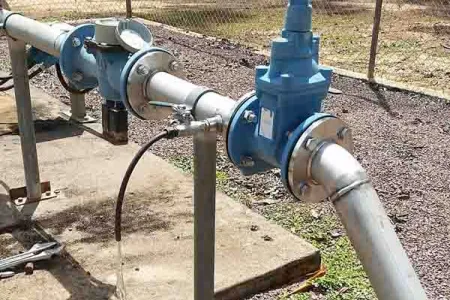
Research led by Charles Darwin University (CDU) and published by PLOS Neglected Tropical Diseases has found the geochemistry of groundwater impacts the occurrence of opportunistic pathogens in the drinking water supply in remote communities.
In the wet-dry tropics of Australia, drinking water in remote communities is often sourced from groundwater bores.
Many aquifers in the tropics of Northern Australia are shallow and contain naturally high levels of iron, which encourages environmental iron bacteria to form biofilms in pipes and the growth of opportunistic pathogens.
Some of these bacteria include the emerging threat Burkholderia pseudomallei, which causes the fatal disease melioidosis in humans and animals. Researchers have not previously studied the microbial composition of water from remote bores.
CDU Research Fellow Mirjam Kaestli and colleagues including Menzies School of Health Research sampled water and biofilms from three remote Indigenous communities in the Northern Territory.
All three communities had previously reported B. pseudomallei clinical infections. The aquifers in each community varied by their age and depth; in addition, one had low levels of iron, another had average levels of iron, and a third had high levels of iron.
Water was collected from five points in each water system, including both untreated sections of the system, and points after chlorination.
On average 19 times more bacterial DNA was found in the source water from the medium iron water supply and 83 times more in the high iron water supply compared to the low iron system.
In addition, biofilms were more common in these supplies and bacteria known to cycle iron were found in the medium and high iron water systems. B. pseudomallei were also found in these two systems and the genomes revealed five different genetic variants of the bacteria, including three that had been previously reported in Australia.
Overall, chlorination successfully contained both B. pseudomallei and another opportunistic pathogen, Pseudomonas aeruginosa.
The research team said results from this study would inform future studies to ultimately improve management guidelines for water supplies in the wet-dry tropics.
Related Articles

AI models show promising results in ICU mortality predictions
Predicting mortality risk in intensive care unit patients is a crucial part of medical treatment, and recent research has found Artificial Intelligence could help clinicians make more efficient and accurate decisions.
Read more about AI models show promising results in ICU mortality predictions
Urgent action needed as Gulf dugong numbers decline, Traditional Owners and researchers warn
Results from the 2025 Gulf of Carpentaria dugong aerial survey have revealed a sharp decline in numbers compared with the last survey conducted in 2007, sparking a call from Traditional Owners for urgent action.
Read more about Urgent action needed as Gulf dugong numbers decline, Traditional Owners and researchers warn
CDU Centre for Better Health Futures featured in building awards
The Charles Darwin University (CDU) Centre for Better Health Futures received four awards at the 2026 Master Builders NT Excellence in Building and Construction Awards.
Read more about CDU Centre for Better Health Futures featured in building awards


