Researchers train AI to diagnose lung diseases
Artificial Intelligence (AI) could become a radiologist’s best friend, with researchers training the technology to accurately diagnose pneumonia, COVID-19 and other lung diseases.
The new study by researchers from Charles Darwin University (CDU), United International University, and Australian Catholic University (ACU) on developing and training an AI model to analyse lung ultrasound videos and diagnose respiratory diseases.
The model works by examining each video frame to find important features of the lungs and assesses the order of the video frames to understand the patterns of the lungs over time.
The model then identifies specific patterns indicating different lung diseases and based on this information, classifies the ultrasound into a diagnosis category such as normal, pneumonia, COVID-19 and other lung diseases.
Co-author and CDU adjunct Associate Professor Niusha Shafiabady said the model had an accuracy of 96.57 per cent, with the AI analyses verified by medical professionals.
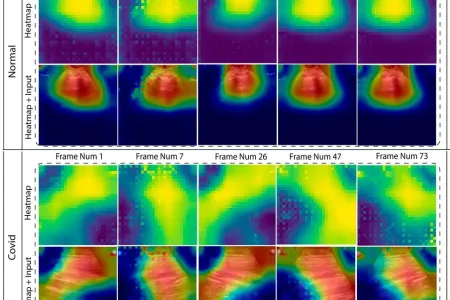
“The model also uses AI techniques to show radiologists why it made certain decisions, making it easier for them to trust and understand the results,” Associate Professor Shafiabady said.
The model uses explainable AI, a method which allows human users to understand and trust the results created by machine learning algorithms.
“The explainability of the proposed model aims to increase the reliability of this approach,” Associate Professor Shafiabady said.
“The system shows doctors why it made certain decisions using visuals like heatmaps. This interpretation technique will aid a radiologist in localising the focus area and improve clinical transparency substantially.
“This model helps doctors diagnose lung diseases quickly and accurately, supports their decision-making, saves time, and serves as a valuable training tool.”
Associate Professor Shafiabady said if fed the appropriate data, the model could be trained to identify more diseases such as tuberculosis, black lung, asthma, cancer, chronic lung disease, and pulmonary fibrosis.
The study was led by researchers at United International University in Bangladesh, alongside CDU researchers Dr Asif Karim, Dr Sami Azam, Dr Kheng Cher Yeo, Professor Friso De Boer and Associate Professor Niusha Shafiabady, who is also a researcher at ACU.
Potential avenues for research include training the model to assess other imaging, such as CT scans and x-rays.
Automated diagnosis of respiratory diseases from lung ultrasound videos ensuring XAI: an innovative hybrid model approach was published in journal Frontiers in Computer Science.
Related Articles

AI models show promising results in ICU mortality predictions
Predicting mortality risk in intensive care unit patients is a crucial part of medical treatment, and recent research has found Artificial Intelligence could help clinicians make more efficient and accurate decisions.
Read more about AI models show promising results in ICU mortality predictions
How ants are cashing in on the fight against money laundering
An AI model inspired by ants, bees, and birds could be the key to cracking down on blockchain-based money laundering, new research led by Charles Darwin University (CDU) has found.
Read more about How ants are cashing in on the fight against money laundering
‘Ecological engineers’ an existential threat to wildlife of iconic wetland
A study examining how feral water buffalo interact with landscapes has uncovered how the pest is having disastrous impacts on northern long-necked turtles in the Top End’s tropical wetlands.
Read more about ‘Ecological engineers’ an existential threat to wildlife of iconic wetland


