Monitoring wind, gas density and temperatures together can better predict mine disasters
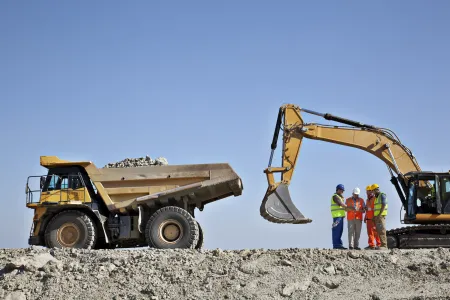
Greater monitoring of wind, gas density and temperatures in coal mines can help reduce the risk of disasters, according to a new joint study with Charles Darwin University (CDU) and University Technology Sydney (UTS).
The study, ‘An FSV analysis approach to verify the robustness of the triple-correlation analysis theoretical framework’, focused on developing a gas monitoring system which takes a holistic approach to assessing wind, gas, and temperature conditions.
The project used data from a large Global Fortune 500 listed mining company in China, which held 46 per cent of the world’s coal production in 2020.
Co-author and CDU Faculty of Science and Technology Associate Professor Niusha Shafiabady said the study examined real-time data and all tests indicated three significant correlations between gas, temperature, and wind.
The project confirmed the framework could be used to develop a gas warning system with improved sensitivity to reduce the incidence of gas explosions.
“A significant number (3,284) of coal mines have high gas content at outburst-prone risk levels across almost all 26 major coal mining provinces in China,” Associate Professor Shafiabady said.
“For example on 10 June 2020, a serious coal and gas outburst accident occurred in Liaoyuan, China which resulted in seven deaths and two injuries, with a direct economic loss of 16.66 million yuan ($3.4 million).
“It is significant to carry out real-time monitoring of coal and rock dynamic disasters during coal mining activities.”
The study was undertaken by CDU, University of Technology Sydney, Shanxi Normal University, Central Queensland University, Taiyuan Normal University, Shanxi Fenxi Mining Industry Group Co and Shanxi Fenxi Mining Zhongxing Coal Industry Co.
Associate Professor Shafiabady said the results of the study could be used by different mining companies to avoid gas incidents.
“The outcomes of this study can also be used in other industries such as chemical industry, oil and gas industry, water treatment plants and semiconductor manufacturing industries,” she said.
“Currently we are working on creating a real-time Artificial Intelligence decision making system with the ability to predict the accidents as an addition to the current designed gas monitoring system.”
The study was published in journal Scientific Reports.
Related Articles

AI models show promising results in ICU mortality predictions
Predicting mortality risk in intensive care unit patients is a crucial part of medical treatment, and recent research has found Artificial Intelligence could help clinicians make more efficient and accurate decisions.
Read more about AI models show promising results in ICU mortality predictions
How ants are cashing in on the fight against money laundering
An AI model inspired by ants, bees, and birds could be the key to cracking down on blockchain-based money laundering, new research led by Charles Darwin University (CDU) has found.
Read more about How ants are cashing in on the fight against money laundering
‘Ecological engineers’ an existential threat to wildlife of iconic wetland
A study examining how feral water buffalo interact with landscapes has uncovered how the pest is having disastrous impacts on northern long-necked turtles in the Top End’s tropical wetlands.
Read more about ‘Ecological engineers’ an existential threat to wildlife of iconic wetland


