News
CDU investigating the biosecurity threat of disease carrying midges
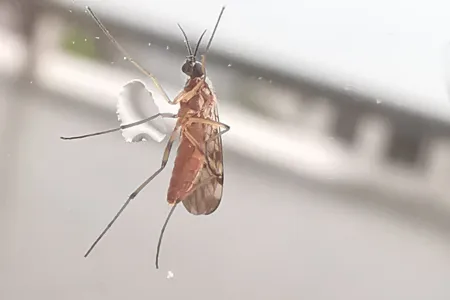
Researchers at Charles Darwin University (CDU) will soon be on the frontline of protecting Northern Australia against potentially severe animal blood borne diseases with a new project looking into the biting midges, an insect of concern for its potential to carry disease that could damage the Australian livestock industry.
Researchers at CDU’s Research Institute for Northern Agriculture (RINA) will work with the Northern Territory’s Department of Industry, Tourism and Trade to study biting midges, or Culicoides, and their ability to carry potentially serious or severe disease that can affect Australian livestock.
RINA’s Professor of Tropical Biosecurity, Maxine Piggott said exotic diseases resulting from an infection transmitted to animals by blood feeding insects such as midges and mosquitoes are on the rise in Australia’s northern neighbouring countries increasing the biosecurity risks to Northern Australia.
“Exotic vector borne diseases are becoming more prevalent in our neighbouring countries and due to this Australia needs to have effective surveillance for early detection,” Professor Piggott said.
“Currently, there is a lack of knowledge on the natural pathways of insect vectors in disease spread in Northern Australia which will impact on preparedness and decision making should any of these exotic diseases cross Australian shores.”
Researchers will collect biting midges samples from multiple locations in Northern Australia and will then use cutting edge genomics approaches to learn more about the biting midges and the potential effect they could have on Australian livestock if an incursion were to occur.
“Dietary analysis of blood meal from the biting midges will be assessed to determine animals hosts as well as analysis of population genomic data using bioinformatics to assess gene flow and natural movement pathways in biting midges,” Professor Piggott said.
“All of this information will help us to build real world data for modelling disease spread and guide surveillance techniques and decision making to provide protection for the livestock industry here in Northern Australia.”
It is hoped that this project could lead to more research being conducted on other insect vectors to further enhance Australia’s animal biosecurity.
“We hope that by working with the Northern Territory Government on this project we can help them effectively plan for the future and we would like to expand this research to build an insect vector database to support biosecurity preparedness across primary industries” Professor Piggott said.
This project has received funding as part of the National Industry PhD Program an initiative of the Federal Government to help solve key industry problems in a range of areas.
RINA, which aims to push agricultural innovation in Northern Australia, is funded by the Commonwealth Government and is supported by project partners including the Department of Tourism, Industry and Trade (DITT), NT Farmers, NT Cattleman’s Association, NT Seafood Council, Murdoch University, James Cook University and Central Queensland University (CQU).
Related Articles

AI models show promising results in ICU mortality predictions
Predicting mortality risk in intensive care unit patients is a crucial part of medical treatment, and recent research has found Artificial Intelligence could help clinicians make more efficient and accurate decisions.
Read more about AI models show promising results in ICU mortality predictions
How ants are cashing in on the fight against money laundering
An AI model inspired by ants, bees, and birds could be the key to cracking down on blockchain-based money laundering, new research led by Charles Darwin University (CDU) has found.
Read more about How ants are cashing in on the fight against money laundering
‘Ecological engineers’ an existential threat to wildlife of iconic wetland
A study examining how feral water buffalo interact with landscapes has uncovered how the pest is having disastrous impacts on northern long-necked turtles in the Top End’s tropical wetlands.
Read more about ‘Ecological engineers’ an existential threat to wildlife of iconic wetland


