AI diagnoses major cancer with near perfect accuracy
One of Australia's most common gynaecological cancers could be detected sooner and more accurately thanks to a specialised Artificial Intelligence (AI) model, new research shows.
Researchers from Daffodil International University in Bangladesh, Charles Darwin University, the University of Calgary and Australian Catholic University developed an AI model which can detect endometrial cancer with 99.26 per cent accuracy.
Endometrial cancer is the most common gynecological cancer in Australia and one of the most diagnosed cancers in Australian women, according to the Cancer Council.
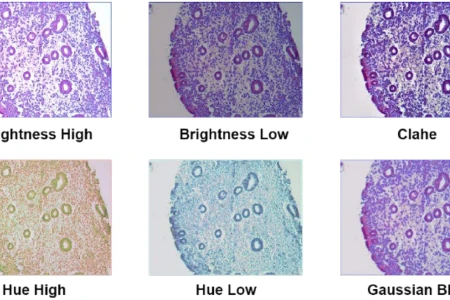
The model, called ECgMPL, examines histopathological images, which are microscopic images of tissue used in disease analysis. The model enhances the quality of the images, identifies the most important areas and analyses the tissue.
The current endometrial accuracy using automated diagnosis is reported to be approximately 78.91 per cent to 80.93 per cent.
Co-author and CDU Lecturer in Information Technology Dr Asif Karim said the model could enhance clinical processes.
“The proposed ECgMLP model outperforms existing methods by achieving 99.26 per cent accuracy, surpassing transfer learning and custom models discussed in the research while being computationally efficient,” Dr Karim said.
“Optimised through ablation studies, self-attention mechanisms, and efficient training, ECgMLP generalises well across multiple histopathology datasets thereby making it a robust and clinically applicable solution for endometrial cancer diagnosis.”
Co-author and CDU adjunct Associate Professor Niusha Shafiabady, who is also an Associate Professor at Australian Catholic University, said the model also had benefits outside of endometrial cancer diagnosis.
“The same methodology can be applied for fast and accurate early detection and diagnosis of other diseases which ultimately leads to better patient outcomes,” Associate Professor Shafiabady said.
“We evaluated the model on several histopathology image datasets. It diagnosed colorectoral cancer with 98.57 per cent accuracy, breast cancer with 98.20 per cent accuracy, and oral cancer with 97.34 per cent accuracy.
“The core AI model developed through this research can be adopted as the brain of a software system to be used to assist the doctors for decision-making in cancer diagnosis.”
ECgMLP: A novel gated MLP model for enhanced endometrial cancer diagnosis was published in the journal Computer Methods and Programs in Biomedicine Update.
Related Articles

AI models show promising results in ICU mortality predictions
Predicting mortality risk in intensive care unit patients is a crucial part of medical treatment, and recent research has found Artificial Intelligence could help clinicians make more efficient and accurate decisions.
Read more about AI models show promising results in ICU mortality predictions
How ants are cashing in on the fight against money laundering
An AI model inspired by ants, bees, and birds could be the key to cracking down on blockchain-based money laundering, new research led by Charles Darwin University (CDU) has found.
Read more about How ants are cashing in on the fight against money laundering
‘Ecological engineers’ an existential threat to wildlife of iconic wetland
A study examining how feral water buffalo interact with landscapes has uncovered how the pest is having disastrous impacts on northern long-necked turtles in the Top End’s tropical wetlands.
Read more about ‘Ecological engineers’ an existential threat to wildlife of iconic wetland


